
The mayoral race remains highly unsettled – but incumbent Scott Gillingham sits in the strongest position. As the municipal election ramps up, more than one-half of city voters do not know which mayoral candidate they will choose on October 28. Among those with a preference, incumbent mayor Scott Gillingham holds a strong lead, with former councillor and MLA Kevin Klein garnering the next highest level of support (55% of decided voters favour Gillingham compared to 23% for Klein). Mike Vogiatzakis has the highest level of support among other candidates (11% of decided voters), with the remaining candidates on the ballot each garnering 1% of the vote or less.
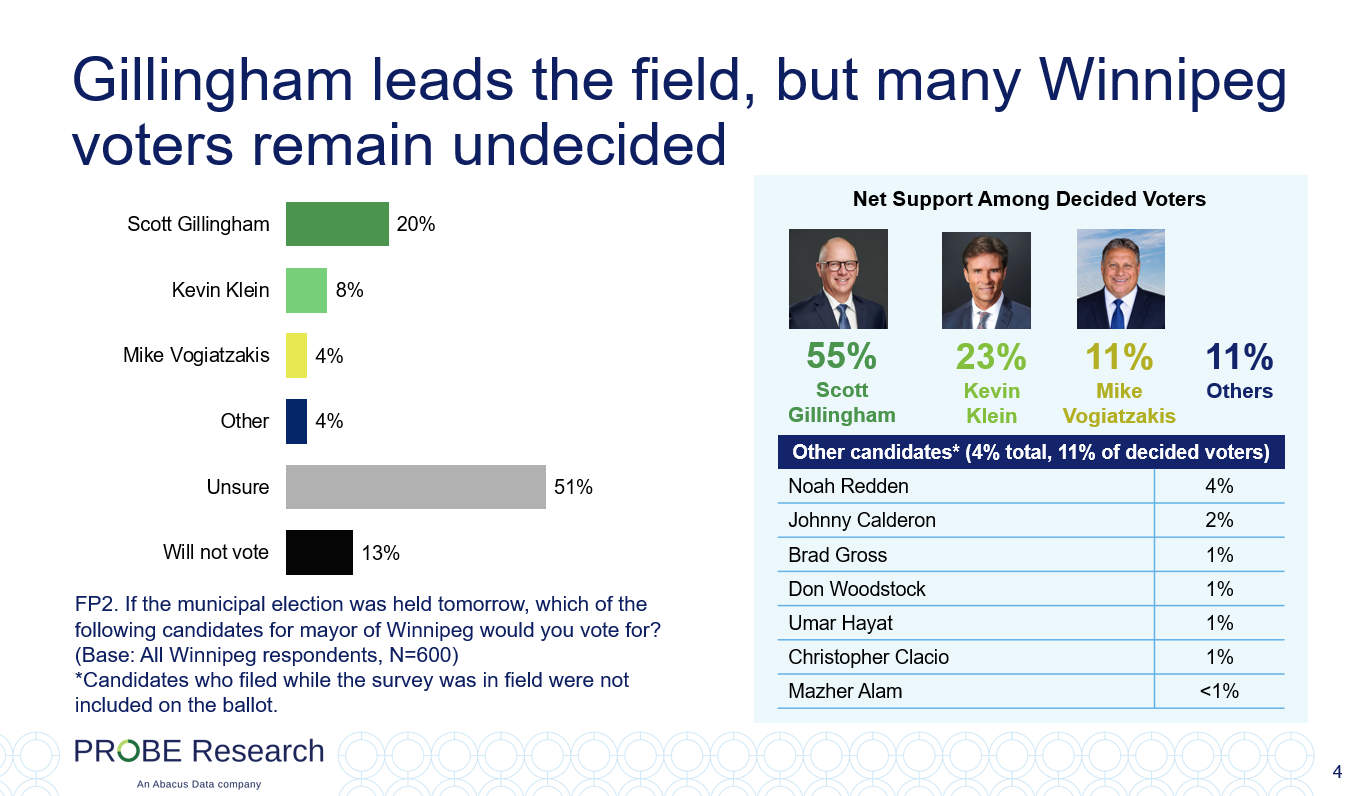
At this stage, Gillingham appears to stand a high chance of being re-elected. However, the fact so many Winnipeggers remain undecided suggests voters do not have a great deal of enthusiasm yet for either the incumbent mayor or those challenging him.
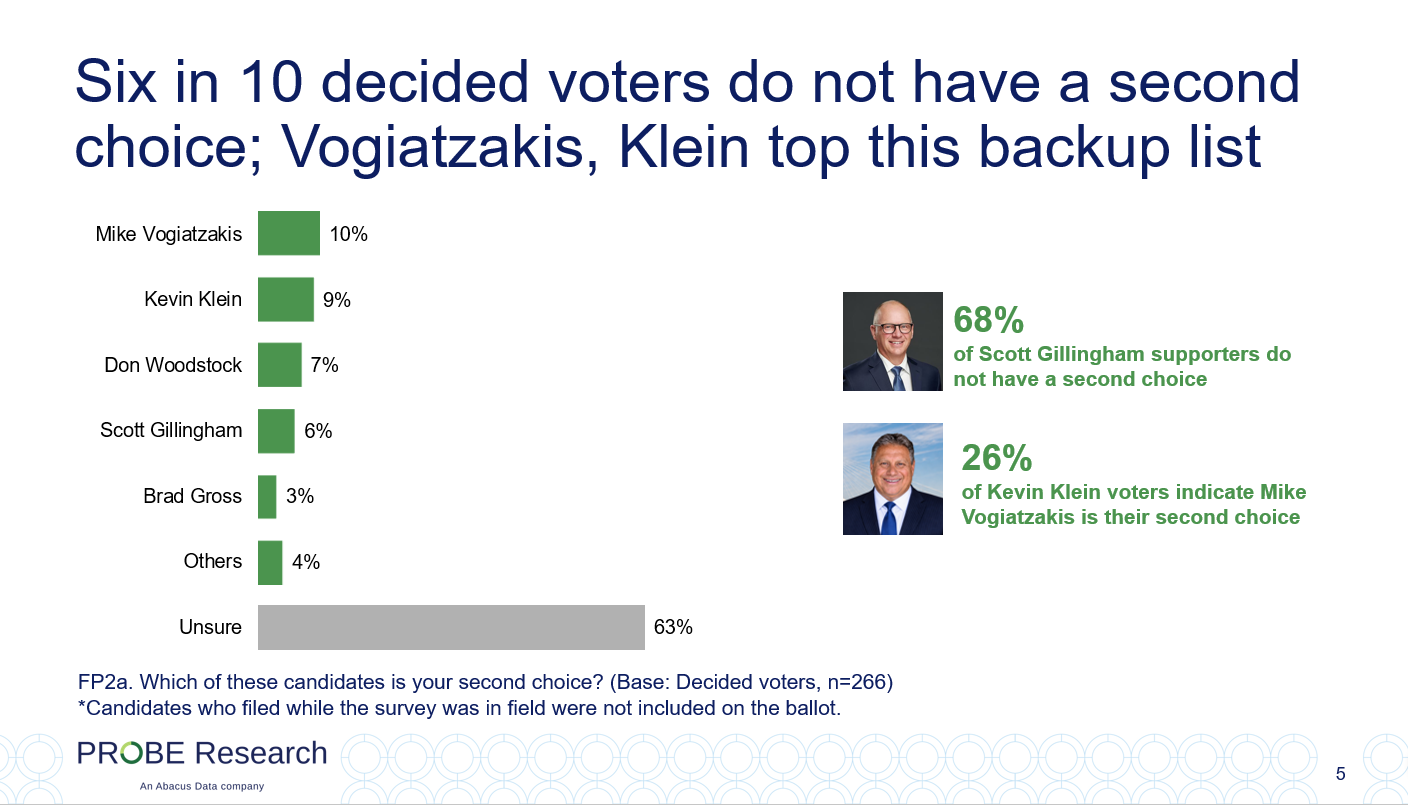
Most decided voters do not have a clear second choice. Two-thirds of those with a preference for mayor cannot identify a second choice. This is especially the case for those backing Scott Gillingham. Kevin Klein and Mike Vogiatzakis are the second choices for about one in 10 decided voters, with a high share of Klein supporters indicating Vogiatzakis is their next-preferred option.
Two-thirds of Winnipeggers indicate they are very likely to vote. However, this is often an overstated figure. More than eight in 10 Gillingham supporters and nine in 10 of those who back Klein indicate they are very likely to cast a ballot on October 28. Those who do not have a preferred mayoral candidate in mind are much less certain about voting.
These results indicate voters remain disengaged. While no incumbent mayor has lost a bid for re-election since the 1950s – and Scott Gillingham appears poised to continue the streak of first-term mayors winning their re-election bids – the overall fundamentals of the race and the mindset of Winnipeg voters suggest this race is by no means a done deal.
Methodology
Abacus Data (previously Probe Research) surveyed a random and representative sample of 600 Winnipeg adults between August 28 and September 14, 2026.
Respondents were contacted using four different methods. The sample includes 274 Winnipeg residents randomly recruited via live-agent operator, 98 randomly recruited via text message/SMS, 104 randomly recruited via Interactive Voice Response (IVR) and 124 members of Probe Research's online panel. All respondents completed the survey using an online platform.
Abacus reached out to Winnipeggers through modified random digit dialing, including both landline and wireless numbers. This ensured all Manitoba adults had an equal opportunity to participate in this survey.
With a sample of 600, one can say with 95 per cent certainty that the results are within ± 4.0 percentage points of what they would have been if the entire adult population of Winnipeg had been surveyed. The margin of error is higher within each of the survey’s population sub-groups.
The sample has been weighted slightly by age, gender, region and educational attainment so it properly reflects the city’s population, based on Census data. SPSS software was used to conduct all statistical analysis.