
From book bans in school libaries to protests at drag brunches — Manitoba’s queer community has been caught between growing support for 2SLGBTQ+ rights and a potent backlash.
Beyond the polarizing public debate, how accepting are Manitobans really of the queer community, in all its many forms? And how is the community itself doing?
To answer these questions, Probe worked with the Rainbow Resource Centre to create Manitoba’s first ever State of the 2SLGBTQ+ Communities report. Rainbow wanted to start tracking public attitudes and the challenges queer Manitobans are facing — to figure out where Rainbow can best make change.
Probe used two interlocking surveys to gather this data, the results of which were launched with panel discussions and speeches at the Queer Space community event last week.
Here are three big takeaways:
1. Manitobans are broadly supportive of 2SLGBTQ+ rights, but there are some big gaps.
We are fairly supportive of strong laws to protect gay rights, and reasonably sure that being 2SLGBTQ+ is a normal and natural thing. And, two-thirds of Manitobans agree there’s more work to do to make sure the queer community reaches full equality.
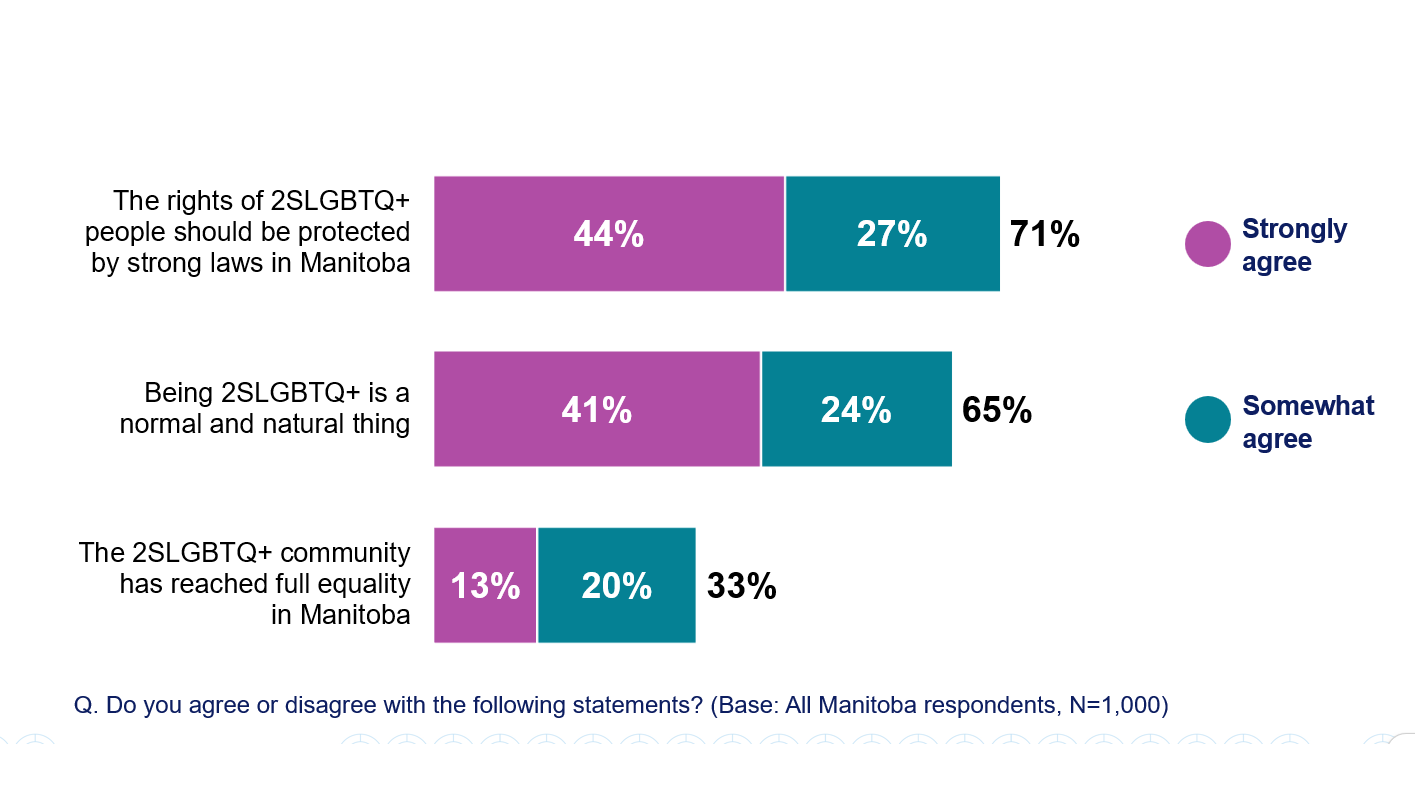
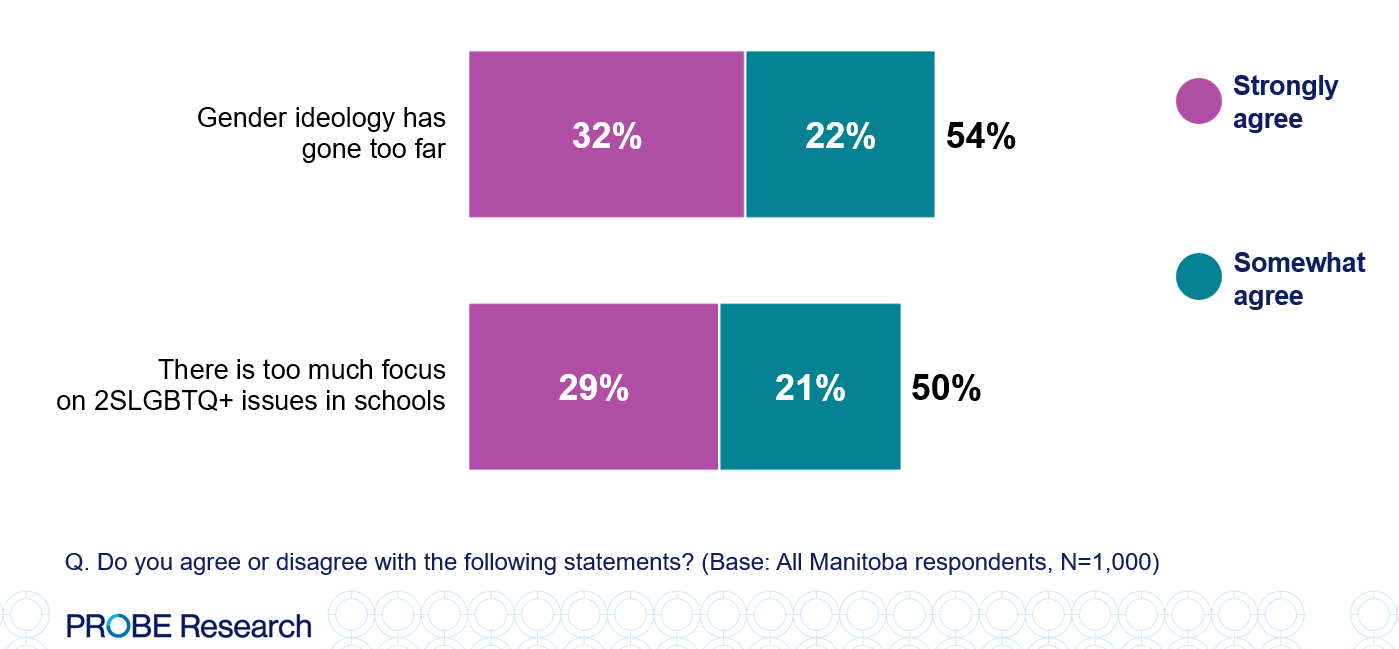
Despite these broadly supportive attitudes, when we tested some negative views of queer people — inspired directly from the hostile emails Rainbow receives — some red flags emerged.
For example, one-half of Manitobans think gender ideology has just gone too far, especially in schools, where book bans, gay-straight alliances and restrictions on how teachers can talk about queer issues are still in play.
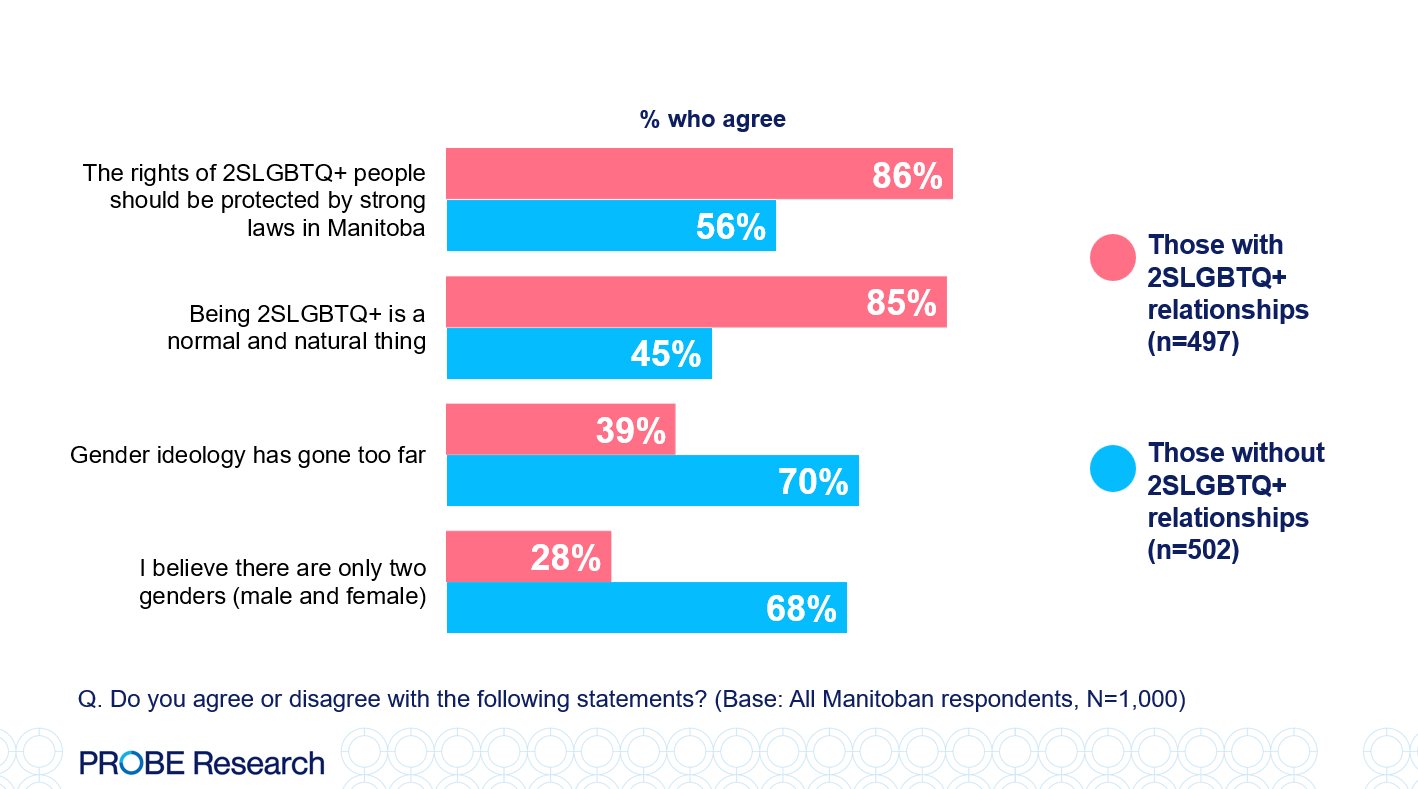
2. One-half of Manitobans have no close relationships with a 2SLGBTQ+ person. Having these relationships tends to trigger much more accepting views.
That seems obvious, right? If you have a kid, a friend, or a close colleague who is queer, you’re much more likely to be accepting and stand up for 2SLGBTQ+ rights.
But the surprising thing was the degree to which this is true. There’s a 30- or 40-point gap in agreement on some key attitudes, depending on whether you have a loved one who is queer. What’s even starker is those with no close queer friends or loved ones are nearly two-and-a-half times as likely to reject the idea that there might be more than two genders, male and female.
3. Queer Manitobans are less likely to feel they belong (but much more aware of their political power).
When we compare the experience of queer and straight Manitobans, there isn’t a huge difference in their self-reported access to things like health care, education and housing. Being low-income was where the gap exists most starkly for 2SLGBTQ+ people. Similarly, queer Manitobans reported a fairly average sense of well-being — they generally feel healthy, have a good outlook for the future and have people they can turn to for help in a crisis.
But, they are less likely to feel a strong sense of belonging and connection, and significantly more likely to feel lonely. This was particularly true for trans Manitobans.
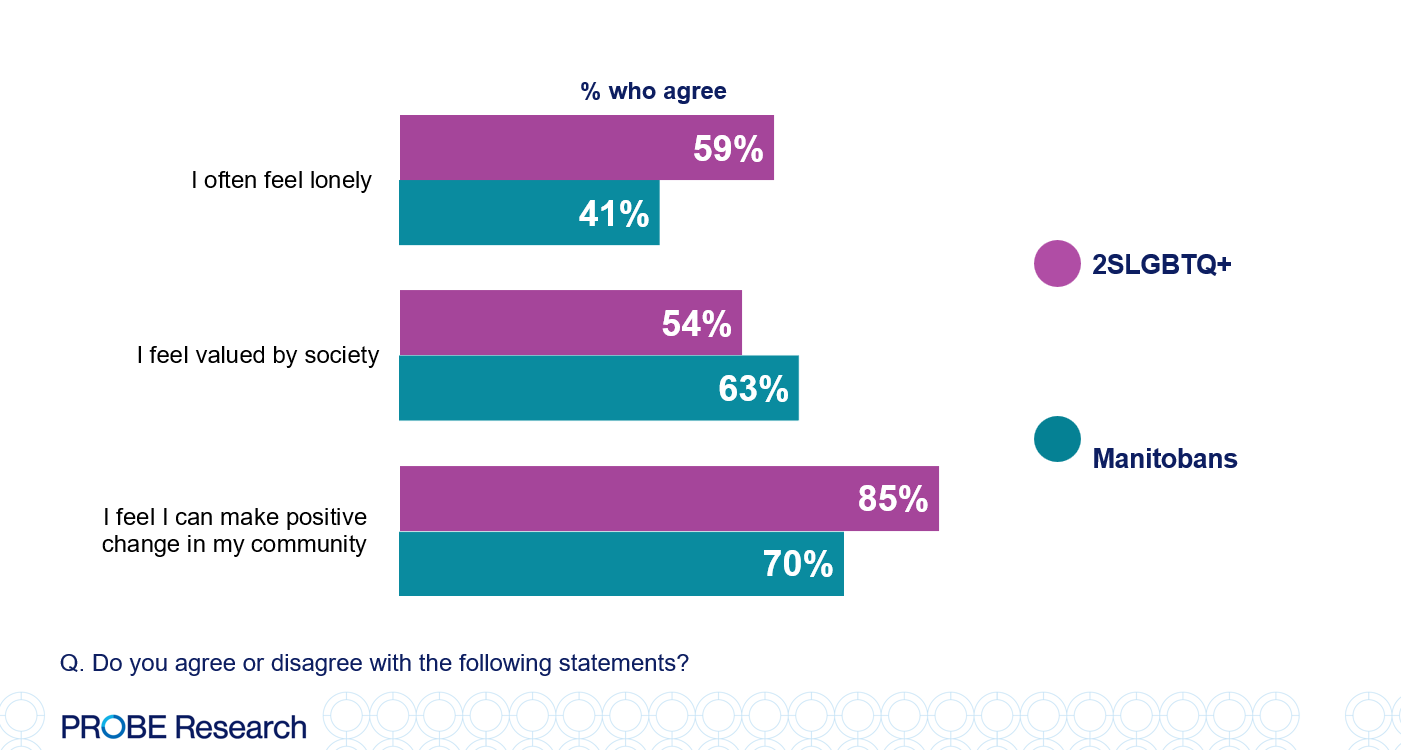
With Pride Month on the horizon, it’s worth ending on a celebratory note. Queer Manitobans are more aware of their political power than non-queer Manitobans. They are more likely to know they can make positive change in their community — a testament to the major shifts in public acceptance they’ve pioneered in the last few generations.
Read more about Manitoba’s first State of the 2SLGBTQ+ Communities here.
Meantime, Happy Pride from Probe Research!