The appetite for change in Winnipeg and the momentum behind a surging candidate has shaken up the city’s mayoral race. But at the end of the day, incumbent mayor Scott Gillingham still looks poised to be re-elected on Oct. 28.
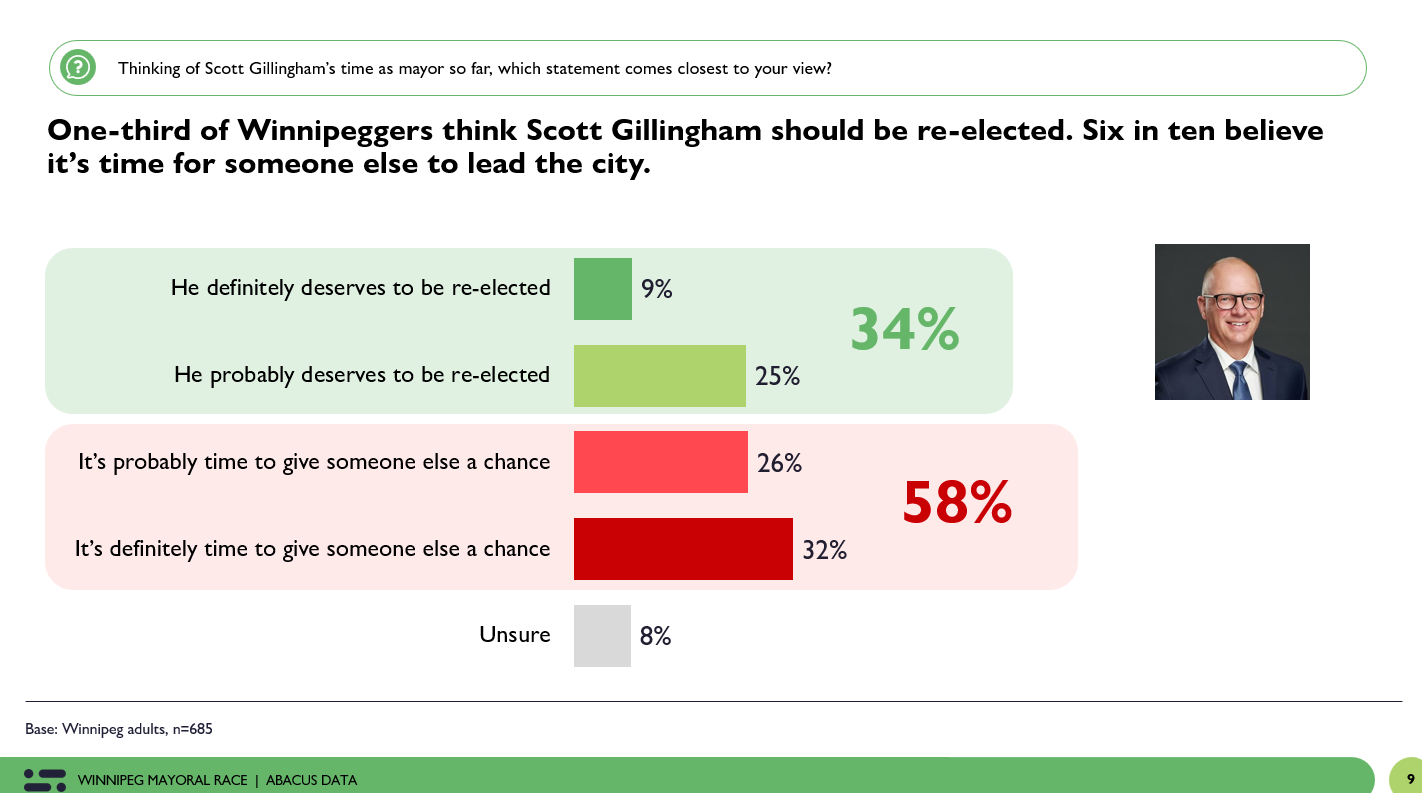
Seven in ten Winnipeggers say it’s time for an overall change at City Hall. Asked specifically about whether Scott Gillingham is being re-elected, six in ten say it’s time to give someone else a chance to lead the city, and only one-third believe he deserves re-election.
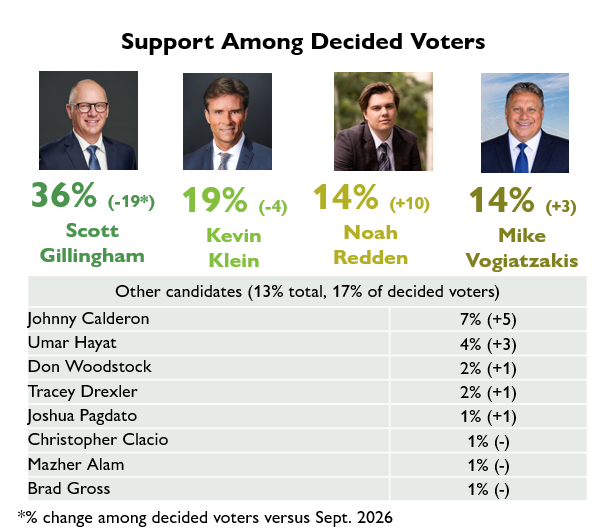
Despite this, Gillingham leads – but his advantage over the mayoral field has eroded during the past month. Among decided voters, Gillingham has 36 per cent support, down from 55 per cent among decided voters in September. Kevin Klein holds 19 per cent, also down slightly from last month. Noah Redden, meanwhile, has made the biggest move in the race – he currently has 14 per cent support, up from 4% in September. Mike Vogiatzakis has the same level of support as Redden, with his support also increasing but to a lesser degree (14%, +3% vs. September). All other candidates combined have 17 per cent. Across all residents, one in five are unsure of which candidate to support.
Redden appears to have garnered support that was previously parked with Gillingham, with one in five Redden voters indicating Gillingham is their second choice. There is also a lot of overlap between Klein and Vogiatzakis voters, as more than half of Vogiatzakis supporters have Klein as their second choice.
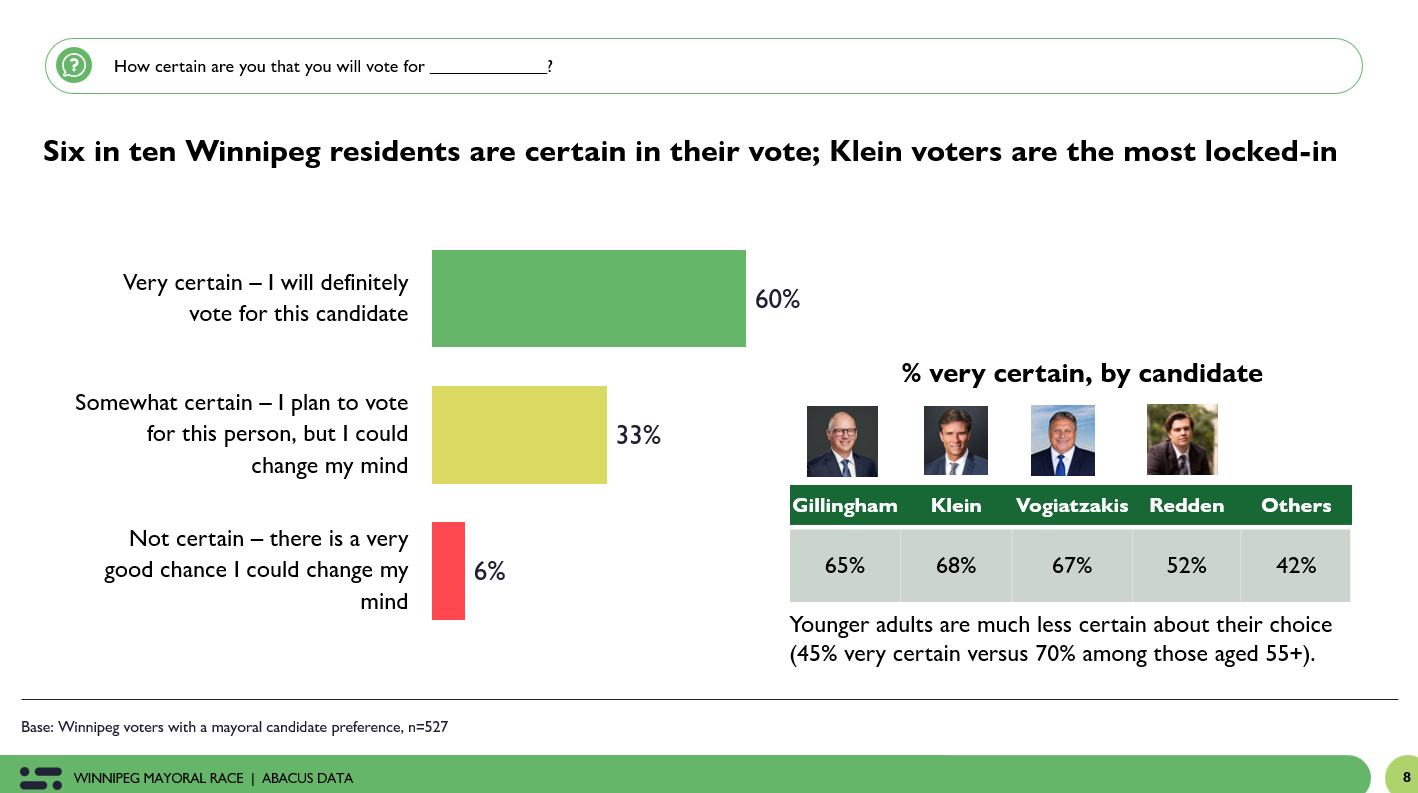
A large share of voters are still not fully locked into their choice. Six in ten decided voters say they’re very certain of their choice, with one-third somewhat certain and six per cent saying there is a good chance they could change their mind. About two-thirds of Klein, Gillingham and Vogiatzakis supporters are zeroed in on their pick for mayor. Redden’s support is somewhat softer, as only about one-half are absolutely certain they will vote for him.
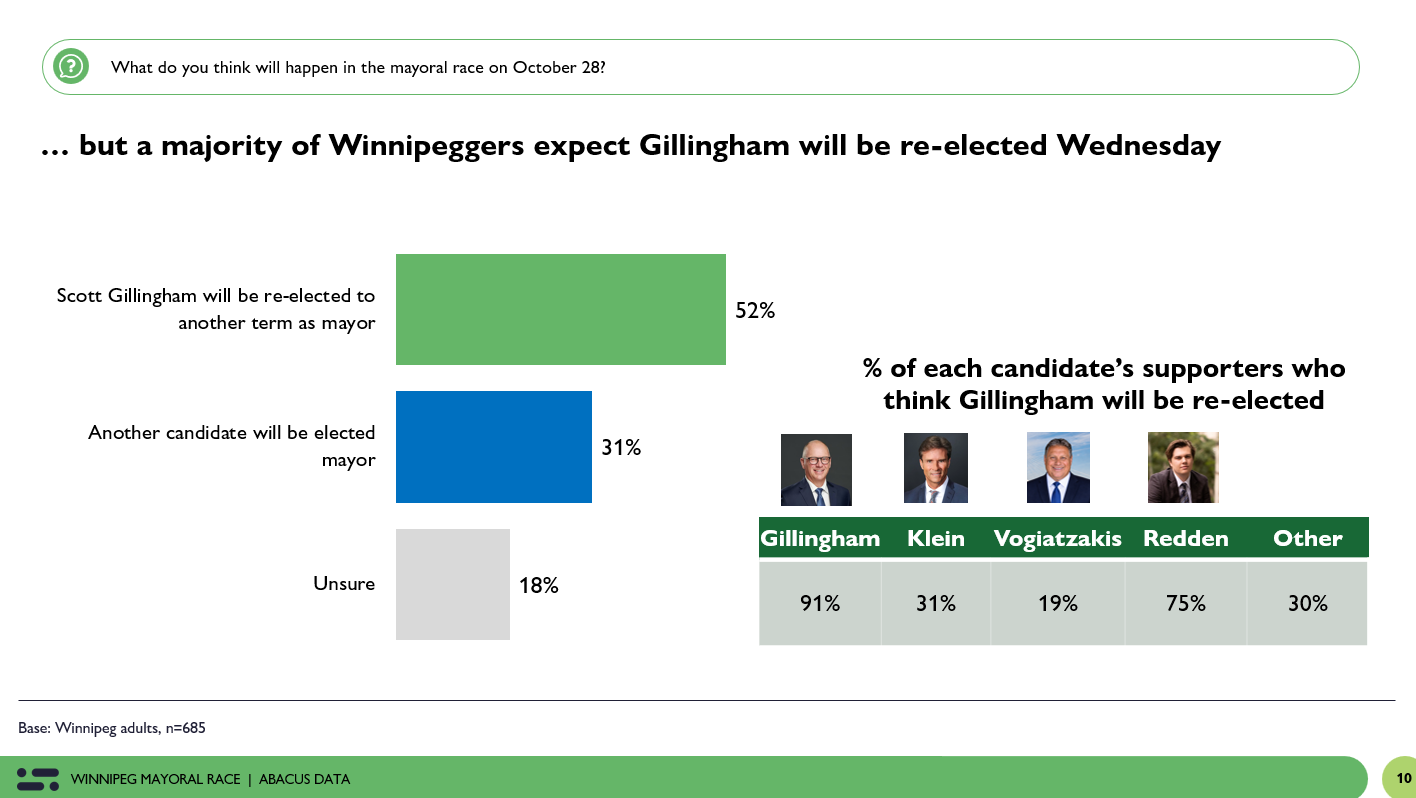
A majority of residents expect Gillingham will win. More than one-half (52%) expect Gillingham to be re-elected on October 28, with three in ten expecting another candidate to win. Notably, three-quarters of Redden’s own supporters expect a Gillingham victory. About nine in ten Gillingham supporters expect their candidate to triumph.
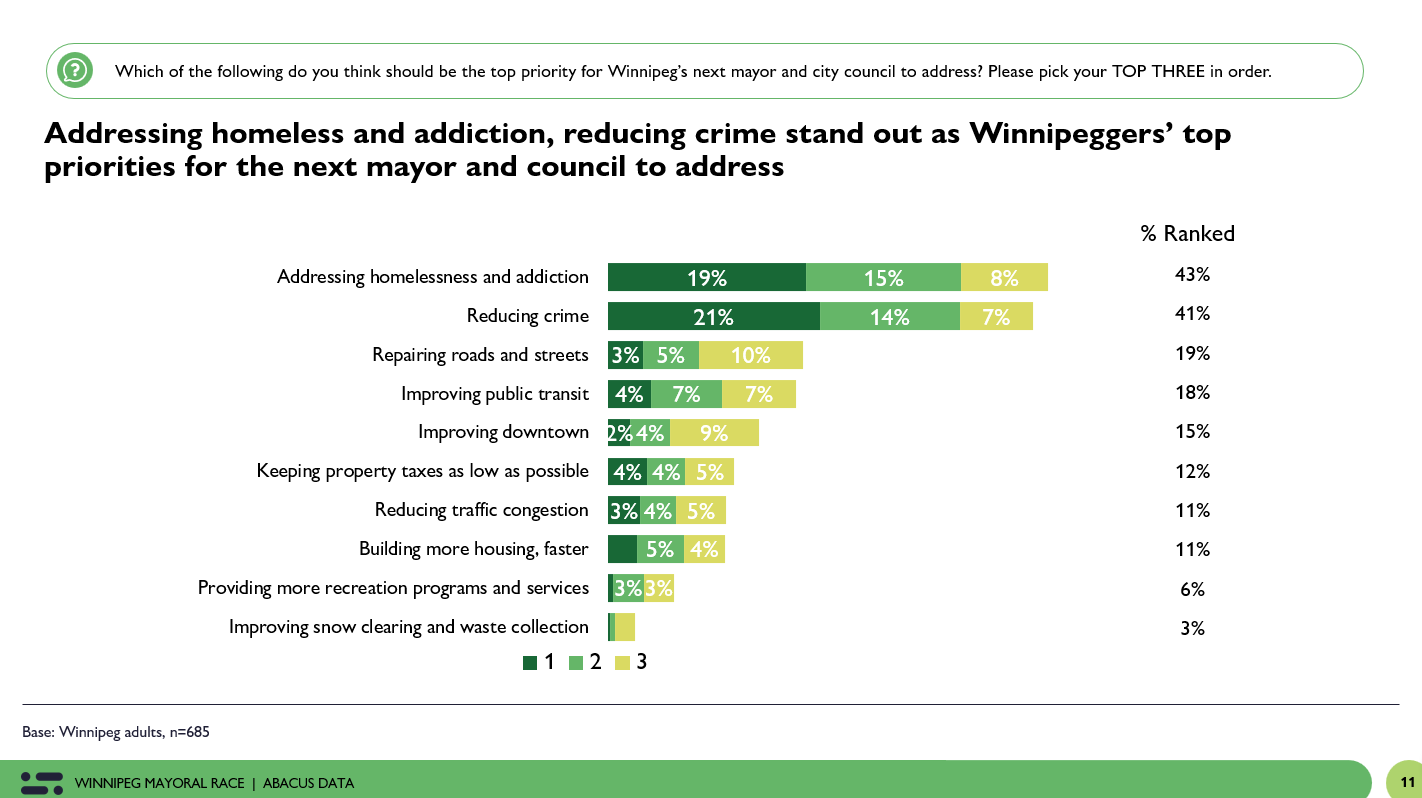
Homelessness and crime dominate the agenda, with each camp prioritizing different issues. Addressing homelessness and addiction (43% ranked it in their top three) and reducing crime (41%) are by far the top concerns for Winnipeggers, followed by improving streets and roads (19%) and public transit (18%). Redden supporters are most focused on homelessness and transit, while Klein and Vogiatzakis supporters are most likely to be focused on crime and low property taxes.
The Upshot
Winnipeggers want change at City Hall, but one specific candidate has not been able to harness this desire. This ultimately plays to Gillingham’s advantage.
Redden’s increase in popularity speaks to his candidacy appealing to Winnipeggers who were either undecided, or who had been parking their support with Gillingham without being overly enthusiastic about his candidacy. While Redden has some momentum, his support is relatively soft and concentrated among younger Winnipeggers who tend to be less likely to vote.
Klein’s growth appears to be stalled, as Vogiatzakis’ enduring support among Winnipeggers frustrated with crime and property taxes may have blunted the momentum he needed to consolidate this voter pool and challenge Gillingham.
In the final week, the race looks like Gillingham’s to lose unless the change vote consolidates behind a single challenger.
Methodology
Abacus Data (previously Probe Research) surveyed n=685 Winnipeg residents (age 18+) from October 16 to 22, 2026. Respondents were recruited from an online panel (488 respondents), as well as via text message (197 respondents). All respondents completed the survey online.
No margin of error can be ascribed. The margin of error for a comparable probability-based random sample of the same size is +/- 3.7%, 19 times out of 20.
The data was weighted according to census data to ensure that the sample matched Winnipeg’s population according to age, gender, educational attainment, and area of Winnipeg.