The 2026 Manitoba Business Leaders Survey finds that Manitoba businesses are in a cautiously optimistic headspace to start the year. At this time in early 2025, more than three in 10 businesses expected their companies to be worse off in a year’s time. Twelve tumultuous months later, the proportion who expect things to be worse has been cut in half. Now, three in 10 are optimistic about the coming year, and more than four in 10 believe their company will be in the same place at this time in 2027.

Concern about tariffs has dropped, with artificial intelligence (AI) now more of an issue. While overall operating costs remain the key issue preoccupying Manitoba business leaders, the proportion who worry about the effect of tariffs on their business has dropped from more than one-third of those surveyed in early 2025 to just one in five today. Although it is less of a concern than issues like attracting and retaining staff, taxation and supply chain disruption, fully one in 10 now cite the impact of AI as something they worry about.

Meanwhile, the hiring outlook for Manitoba businesses remains weak. The proportion of companies who expect to hire more staff in the coming year continues to drop, with only 14 per cent expecting to do so and a slightly smaller proportion (6%) expecting to cut staff in the next 12 months. At the same time, only four in 10 businesses report having difficulty finding skilled workers – down significantly from nearly six in 10 at this time last year.
Government Performance and Views on Trade
Manitoba businesses are now happier about the work governments are doing to improve the business climate. One-third – up from just 14 per cent two years ago – think the federal government is doing an excellent or good job of creating a good business climate. A similar proportion (up from less than one in five two years ago) give the same high marks to the provincial government, with three in 10 continuing to praise the efforts of their local government in this regard.
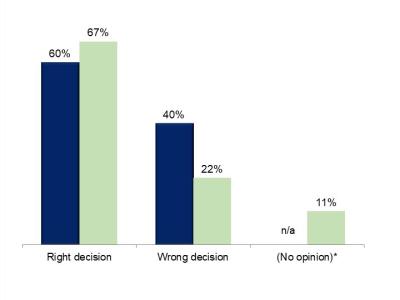
Both Manitoba businesses and the broader public have a great deal of confidence in Prime Minister Mark Carney and the federal Liberal government’s approach to dealing with the U.S. Nearly six in 10 businesses – and an even higher proportion of the public – are confident in the approach the prime minister and his government are taking to dealing with U.S. President Donald Trump and his trade policies.

Confidence in the federal government has increased significantly among both businesses and the public over the past year. At the same time, fewer Manitoba business leaders and residents are confident a Pierre Poilievre-led federal Conservative government could effectively deal with Trump’s trade policies.
About one-half of businesses (and a similar proportion of residents) are confident in the approach Premier Wab Kinew and the provincial NDP government are taking on this issue.
Business leaders and the broader public express similar views on diversifying trade – and don’t feel pressure to sign a flawed free trade deal with the U.S. As Canada prepares to negotiate an updated free trade deal with the U.S. this year, seven in 10 business leaders agree any trade deal with the U.S. could be changed by Trump.
More than four in 10 also agree that holding out and signing no deal with the U.S. is better than signing a bad deal for Canada.
At the same time, more than six in 10 business leaders are confident that any trade lost to the U.S. can be replaced by more trade with other countries. To that end, nearly one-half of business leaders (and nearly six in 10 Manitobans) agree that Canada should increase trade with China, even at the risk of upsetting the U.S.

Adoption and Expectations for Artificial Intelligence (AI)
AI adoption among Manitoba businesses remains flat, with fewer businesses expecting this technology to lead to a smaller workforce.
About one-third of Manitoba businesses report using AI to some degree in their operation, including one in five who actively use it and another 15 per cent who are exploring adoption. The proportion of companies actively using AI has not increased significantly in the past year.
Fewer than one in 10 businesses, meanwhile, now expect AI will lead to reductions in the size of their workforce, with an increasing proportion anticipating that this technology will have no effect on their employee counts. Larger firms, however, are slightly more likely to expect to reduce the number of employees they hire.

Methodology
The Manitoba Business Leaders Survey (MBLS) is an annual scientific survey of senior business officials from across the province. The survey sample includes a stratified sampling of CEOs, presidents, business owners and designated senior corporate officers from small, mid-sized and large commercial establishments as defined by Statistics Canada and the Manitoba Bureau of Statistics. This business sampling includes publicly traded and private companies from all major sectors of Manitoba industry. This survey has been conducted annually since 2003.
For the 2026 survey, Probe Research conducted a survey of 202 business owners and managers located throughout Manitoba between February 6 and March 2, 2026. Respondents were contacted via telephone and completed the survey via telephone with a live interviewer or via a secure online survey link.
The survey sample was stratified to ensure representation from small enterprises (1-9 employees), medium-sized companies (10-49 employees) and large businesses (50+ employees). Quotas were also set based on region as well as by business sector (services, manufacturing, resources). The sample does not include government departments/agencies, representatives of other public sector entities or not-for-profit organizations.
With a sample of 202, one can say with 95 per cent certainty that the results are within ± 6.9 percentage points of what they would have been if all private-sector business owners/managers in Manitoba had been surveyed. The margin of error is higher within each of the survey’s population sub-groups.
Disclosure Statement
Probe Research is a member of the Canadian Research Insights Council (CRIC) and confirms that this research fully complies with all CRIC Standards including the CRIC Public Opinion Research Standards and Disclosure Requirements. Learn more here.